Search this site
44 results found with an empty search
- YEA 4th Edition, Day 9: Last Human Library Session and Project Refinement
On 19 August, the last Human Library session of the Young Environment Ambassador Programme (YEA) welcomed nine distinguished experts from various professional institutions. This important gathering focused on refining the students’ project ideas, offering invaluable advice and encouragement to help shape their sustainable initiatives. Our honoured guests included Mr Travis Kan, Chairman of the Energy Institute (Hong Kong Branch); Mr Wan Kai Hong, Regional Director of the Institute of Civil Engineers Hong Kong; Mr Samuel Kwong, Fellow and Councillor of the Hong Kong Institute of Qualified Environmental Professionals; Ms Sunnie Lau, Council Member of the Hong Kong Institute of Urban Design; Dr Veronica Chan, Vice Chair, Activities Committee of the Environmental Management Association of Hong Kong; Ar Ms Yvonne Leong, Chair, Environment & Sustainable Development Committee of the Hong Kong Institute of Architects; Mr Sam Lai from Engineers Without Borders Hong Kong; Dr Yin-Lun Chan, Vice President of the Hong Kong Institute of Landscape Architects; and Mr Derek Li from the Hong Kong Institute of Planners. Throughout the session, each expert shared insights and encouragement, helping students to think critically about their projects without feeling overwhelmed. Ms Yvonne Leong described the session as very interesting and advised students not to be too stressed about the project competition, encouraging them to focus on learning and growth. Dr Yin-Lun Chan reflected on the privileges of the current generation, noting that having almost everything we want can lead to neglecting our surroundings. He urged students to study how better planning and design can improve the environments in which people live. Ms Sunnie Lau encouraged students to maximise their efforts by identifying actionable ways to enhance sustainability for those around them — whether among teenagers or within their communities. She suggested listing these actions and seeking feedback, emphasising that even small changes can be significant steps towards success. Mr Sam Lai praised the students for their maturity and comprehensiveness, recognising their thoughtful consideration of budgets and sponsorships. Although concerned about the two-month timeline, he advised them to set realistic goals within this period and to consider the sustainability of their projects, reassuring them not to worry too much. Mr Samuel Kwong offered a heartfelt message, saying that having no fixed goal can still be positive. He encouraged students to pursue studies and projects that bring happiness and meaning, hoping his words inspire them and that the session would spark their interest. Mr Derek Li happily shared his expertise in urban planning and wished the students success on their group project. He encouraged them to incorporate innovative ideas and to consider the needs of different communities in order to design effective solutions for their project. Mr Travis Kan reminded students that winning or losing is less important than the process itself. He emphasised that engaging with diverse stakeholders and embracing the experience is invaluable for their futures, urging students to appreciate every step of their journey. Mr Wan Kai Hong acknowledged the students’ seriousness and commitment to their projects, reiterating that the process holds greater significance than the results. He encouraged them to enjoy the learning path. Dr Veronica Chan was delighted to meet the students and shared reflections from her university life. She hoped students would also enjoy their journey and advised choosing subjects based on personal interest above all else. In the afternoon, Ms Kitty Tam, Programme Lead of Civic Exchange, shared her inspiring journey with the YEAs. She reflected on her time as an intern in the Amazon rainforest after graduation, an experience that made her realise her passion for conservation and her desire to pursue policy as a way to create lasting change. Drawing on her current work in Hong Kong, Kitty highlighted how civil society can lead the city towards a more sustainable future. She encouraged students to see their projects not just as exercises, but as seeds of real policy change, reminding them that their voices and ideas can influence how Hong Kong develops. The YEAs then visited the Lai Chi Kok Drainage Tunnel, guided by Ms Joey Ho from the Drainage Services Department. Students learned how the tunnel was designed to intercept stormwater runoff from uphill areas, substantially reducing flooding risks in Lai Chi Kok, Cheung Sha Wan, and Sham Shui Po. Joey explained the innovative integration of engineering and sustainability, such as the stilling basin that both manages stormwater and supports the Butterfly Valley Road Pet Garden above. This creative use of space, combining flood prevention, recreation, and transportation, demonstrated how infrastructure projects can go beyond functionality to serve communities and the environment at the same time. We, Civic Exchange, would like to extend our heartfelt thanks to all the speakers for their generosity and wisdom. Their guidance has undoubtedly enriched our students’ understanding and inspired fresh ideas as they continue to develop their innovative projects. The last Human Library session marks an important milestone in the students’ journey. With expert support and renewed confidence, they are now better equipped to bring their sustainable visions to life.
- YEA 4th Edition, Day 4: Sustainability Learning at The Hong Kong University of Science and Technology (HKUST)
On 1 August 2025, the Young Environment Ambassador (YEA) programme took our students to The Hong Kong University of Science and Technology (HKUST) for a full day of immersive learning about sustainability. We extend our sincere thanks to Professor Arthur Lau, Program Co-Director of EVMT, Division of Environment and Sustainability at HKUST, for leading this engaging training session. The day began in the classroom, where Professor Arthur Lau warmly welcomed students by inviting them to share their most memorable experiences from previous days of the YEA programme. About one-third of the students highlighted the field visit to Redress as their favourite, followed by trips to Beetales and Vessel Repair, reflecting their enthusiasm for hands-on learning. Following this, Professor Arthur Lau introduced the ‘Framework for Sustainability’, and divided students into small groups to explore the life cycle of a cotton T-shirt. Building on their earlier visit to Redress, the workshop helped deepen their understanding of fast fashion’s environmental impact. They looked at how a T-shirt is made — from raw materials and energy use to waste and pollution — offering a full picture of its journey from production to disposal. Professor Lau also highlighted the importance of systematic thinking when tackling complex environmental issues. To illustrate this, he shared an image of several blind people each touching different parts of an elephant and guessing what they were holding — a vivid reminder that we must look beyond isolated details and strive to see the bigger picture. In the afternoon, The Sustainability/Net-Zero Office team guided students on a campus tour highlighting ongoing sustainability initiatives. Students learned about campaigns such as the HKUST beach clean-up near the university, organic farm management, and a community garden maintained by staff and students alike. A special stop was made at the Butterfly Garden, where students observed various species of butterflies, trees, and plants. The garden serves as a living classroom to promote biodiversity awareness. Students were also encouraged to use technology to upload butterfly photos and learn about species identification, blending nature with digital engagement. Returning to the classroom, students participated in another workshop where they presented their proposed graphs illustrating operational principles of the circular economy. Beyond clean energy transitions, some interesting ideas emerged — such as sharing washing machines within communities to reduce consumption and using natural sunlight and wind to dry clothes instead of dryers. Professor Arthur Lau praised the students’ creativity and expressed eagerness to see their future contributions to sustainability. Before concluding, Professor Arthur Lau reminded everyone that customers ultimately shape market demand, underscoring the power of consumer choices in driving environmental progress. We at Civic Exchange thank Professor Arthur Lau and The Sustainability/Net-Zero Office team for their invaluable support. Many students expressed interest in HKUST’s sustainability programmes following the workshop. We are grateful that the planned activities resonated so well, and we look forward to supporting the students as they continue their journeys toward positive environmental impact.
- YEA 4th Edition, Day 7: Human Library Insights and Exploration from Hong Kong Observatory and Tsui Ping River
On 12 August, the Young Environment Ambassador (YEA) programme marked another fruitful day filled with enriching experiences and meaningful connections. The day opened with the much-anticipated second round of the Human Library session, where six distinguished policy makers and environmental professionals generously shared their insights with our students. The guests included Mr Eric Wong, Assistant Environmental Protection Officer from the Environmental Protection Department (EPD); Ms Shirley Fong, Senior Environmental Protection Officer also from EPD; Ms Ashley Yiu, Engineer from the Electrical and Mechanical Services Department; Mr Timothy Lau from the Central and Western District Council; Mr Calvin Au, a public policy researcher; and Ms Eliza Chan, Chief Experimental Officer from the Hong Kong Observatory. Throughout the morning session, the students engaged deeply with the speakers, asking thoughtful questions and demonstrating impressive knowledge about environmental issues. Mr Eric Wong concluded the Human Library by expressing how impressed he was with the students’ thorough preparation and genuine enthusiasm. Ms Shirley Fong thanked the students for their keen interest in her sector and noted that the meaningful questions posed reflected their serious commitment. Ms Ashley Yiu appreciated the curiosity students showed in engineering and building energy topics, emphasising the importance of energy conservation in buildings and encouraging everyone to take small steps for a collective positive impact across Hong Kong. She also pointed students towards her department’s comprehensive online information pack on energy saving. Mr Timothy Lau praised the clarity some students had about their career paths, encouraging them to explore their passions broadly and to embrace new experiences and friendships that can benefit their personal and professional growth. He shared how his own journey into public service began with an internship at the district council during high school. Mr Calvin Au was pleasantly surprised by the students’ solid understanding of local policy debates and candidly admitted he learned much from their insightful questions. Ms Eliza Chan thanked the students for their curiosity about meteorology and urged them to continue exploring online resources to satisfy their interests. The afternoon was equally engaging as students visited the Hong Kong Observatory in Tsim Sha Tsui. Ms Lily Leung from the Observatory team provided a captivating introduction to the institution’s history and operations, including a video explaining the creation of the Observatory’s iconic logo and name. Students were fascinated to learn that, beyond daily weather forecasts, the Observatory plays a crucial role in supporting sectors such as aviation and ferry services to ensure public safety. At the Central Forecast Office, Mr Ryan Lee gave an enlightening talk about the complex process of weather forecasting. He explained how their team must first understand current weather conditions, including high-altitude air patterns, and then use this data combined with human expertise and artificial intelligence to predict future weather accurately. Mr Lee also introduced technologies such as radar systems for rain detection and artificial satellites to monitor cloud patterns, giving students a clearer picture of the Observatory’s sophisticated work. The group then toured the weather forecast green screen filming studio, where Mr Ryan detailed the daily routine from gathering information to scriptwriting, makeup, filming, and broadcast distribution. The students eagerly took turns trying their hand at presenting weather reports, an experience that many found exciting and memorable. The visit concluded at the Exhibition Hall, where students explored historical models and relics of the Observatory. Mr Lee shared fun facts about how time was once determined using the sun and the Time Ball before the advent of modern clocks. They also visited the outdoor thermometer shed housing traditional dry- and wet-bulb thermometers. Inspired by the day’s experience, two students expressed their ambition to join the Hong Kong Observatory team in the future. Following this, the group travelled to Kwun Tong to visit the Tsui Ping River, with Mr Felix Wong from Drainage Services Department hosting a detailed tour. Mr Wong introduced their four major goals for the river revitalisation project: enhancing greenery to improve the environment, creating more public spaces, implementing flood control measures, and connecting community spaces to foster public engagement. During the walk, they visited several key sites, including an artificial wetland where different species such as umbrella plants and water lilies thrive. They also experienced a people-oriented garden that showcases how urban space design can promote community wellbeing. Overall, the students absorbed a wealth of knowledge and inspiration throughout the day. The experiences and insights gained are expected to guide their future decisions regarding environmental projects, school subject choices, and potential career paths. We at Civic Exchange sincerely thank all the speakers and partnering organisations for their invaluable support and dedication in making this memorable and impactful day possible. Together, we continue to nurture the next generation of committed environmental leaders who will help build a sustainable future.
- YEA 4th Edition, Day 6: Human Library Insights and Oyster Reef Restoration Spark Environmental Passion
After a sudden shift to an online class for our face-to-face training on Tuesday, 8 August greeted us with bright sunshine and clear skies — the perfect setting for the Young Environment Ambassador (YEA) programme to proceed successfully. The day combined enriching conversations with passionate environmental leaders in a Human Library session, followed by an immersive outdoor experience at Pak Nai, where students participated in an oyster reef restoration workshop. The day began with an exciting Human Library session featuring nine distinguished guests from a wide range of environmental organisations in Hong Kong. Our speakers included Ms Kelly Chan, Project Officer from Drink Without Waste; Mr Roy Ng, Campaign Manager from The Conservancy Association; Ms Suet Mei Wong, Senior Conservation Officer from Hong Kong Bird Watching Society; Ms Karen Ho, Head of Corporate and Community Sustainability from World Wildlife Fund-Hong Kong; Mr Gomen See, Marine Science Programme Manager from Hong Kong Maritime Museum; Mr Wendell Chan, Senior Officer from Friends of the Earth; Mr Ken Lee, CEO of Wu Zhi Qiao and others. The Human Library fostered intimate group discussions, where three students at a time engaged collectively with one speaker for about ten minutes. After each session, a different speaker would join the same group of three students, allowing them to explore a variety of environmental career paths together. This format encouraged rich exchanges of ideas and provided tailored advice to support the students’ project development. As the session drew to a close, the speakers offered inspiring and interconnected final remarks that helped tie together their guidance for the students’ benefit. Mr Gomen See began by emphasising the importance of setting clear, measurable targets, such as defining how many students and teachers a school-based project should engage to ensure meaningful impact. Ms Kelly Chan reinforced these points by highlighting sustainability, suggesting that students design campaigns that can be carried forward by others, ensuring their longevity. Ms Suet Mei Wong complemented this by encouraging students to start their efforts locally, focusing on the immediate community rather than attempting broad-scale projects from the outset, while also tapping into their creativity for innovative solutions. Ms Karen Ho emphasised the importance of engaging with various stakeholders for valuable insights. Highlighting the power of collaboration, Mr Ken Lee encouraged students not to work in isolation but to connect with wider groups and to undertake thorough research, drawing on diverse stakeholder insights to strengthen their projects. Mr Wendell Chan echoed the emphasis on knowing the target audience and pointed out the valuable resources that schools can offer to support such initiatives. Finally, Mr Roy Ng inspired the students to approach their projects with confidence, reminding them that even if similar campaigns exist, there is always room for improvement and innovation. He stressed that convincing their target audience remains key to success. In the afternoon, students travelled to Pak Nai to take part in an oyster reef restoration workshop organised by The Nature Conservancy. After an introductory talk explaining the ecological importance of oyster reefs, the students donned special protective shoes designed to safeguard their feet from sharp oyster shells, allowing them to explore the site safely. As they walked through the reef area, Ms Jennifer Cheng from the TNC team introduced them to various marine species dependent on this habitat. The students then actively engaged in oyster reef restoration by using shovels. Throughout the activity, Ms Jennifer explained how oyster reefs improve water quality by filtering the water and provide shelter for many aquatic organisms, as well as other ecosystem services. Despite the heat of the sun and physical exertion, the students were proud and joyful, their smiles reflecting the satisfaction of contributing directly to environmental restoration. We at Civic Exchange would like to express our heartfelt thanks to all the guest speakers and The Nature Conservancy for generously sharing their expertise and making this day an unforgettable experience for our Young Environment Ambassadors. We believe that the knowledge and hands-on insights gained will inspire and empower these young leaders to develop and implement meaningful environmental projects in the future.
- YEA 4th Edition, Day 5: Design Thinking and Climate Action Workshop Goes Virtual Amid Record Black Rainstorm
On 5 August 2025, Hong Kong witnessed its fourth Black Rainstorm Warning within just eight days—a sobering new record that underscores the accelerating pace of climate change and the urgent need for collective action. Coincidentally, this was also the day scheduled for our full-day, face-to-face design thinking workshop with students from the Young Environment Ambassador (YEA) programme honing their climate action projects. Extreme weather once again forced a change of plans; for the safety of all, we moved the session online. We owe a huge thanks to Mr Spencer Liu, Founder & Managing Director of Riverwood Climate Solutions, for pivoting swiftly and leading an engaging Zoom workshop. His adaptability ensured the session’s momentum—and its impact—remained undiminished, despite the literal storm outside. The day opened with Spencer delivering an insightful overview of design thinking: not just as a process, but as a mindset for generating meaningful, user-centred solutions. Students then dove straight into identifying real-world environmental issues ripe for creative problem-solving. To foster empathy and a deeper understanding of these challenges, small Zoom breakout groups took part in a stakeholder interview simulation. Here, students role-played as various affected parties—asking questions like, “How does climate change affect you?” and “What kind of help would make a difference?” Using empathy maps, students captured what their interviewees said, thought, did, and felt, gaining perspective on diverse viewpoints. Before lunch, Spencer led sessions on crafting strong problem statements, developing personas, and mapping user journeys. Students learned to distil complex issues into clear, actionable focus areas, and began sharing inspirations—a vital spark for group creativity. After the break, the session shifted to intensive brainstorming and ideation. Students first mapped their individual ideas, then regrouped to prioritise and select project topics offering the highest impact with feasible implementation. Clear criteria and collaborative discussion helped each team settle on a project goal. With project topics confirmed, students tackled the next layer: detailed problem statements, considering decision-makers, stakeholders, indicators of success, and potential constraints. Persona creation and user journey mapping followed, serving as blueprints to keep their projects grounded in real people’s experiences. A second brief break gave minds a rest before students jumped into paper prototyping—sketching their concepts into tangible forms. Each team presented their initial solutions to the class, including feedback from Spencer and the Civic Exchange team. For example, a group proposing local oyster reef restoration was constructively challenged on constraints like budget, the need for scientific expertise, and land-use permissions—a real-world reality check that highlighted the importance of planning ahead. The workshop wrapped up with reflections and feedback from Spencer. Both he and the Civic Exchange team expressed excitement for what’s to come from the students. Despite the record-breaking rain and the sudden switch to virtual format, the workshop proved that determination—and adaptability—can weather any storm. We look forward to seeing these budding change-makers turn their ideas into action. If there’s one lesson from our week of black rain, it’s that resilience and creativity are more vital than ever in shaping a sustainable future.
- YEA 4th Edition, Day 2: Nature-Based Solutions, Biodiversity & Field Trip to Beetales
On 25 July 2025, the Young Environment Ambassador (YEA) programme continued with an engaging and insightful Day 2 filled with expert talks, interactive activities, and a hands-on field visit. The focus of the day was on deepening students’ understanding of biodiversity, nature-based solutions, and local conservation efforts in Hong Kong. To start the day, we were delighted to welcome Outdoor Wildlife Learning Hong Kong (OWLHK), which presented a fascinating talk on nature conservation and biodiversity in the city. OWLHK introduced students to several precious and unique species found in Hong Kong, raising awareness of the rich wildlife that exists alongside urban areas. To bring the learning to life, OWLHK then hosted a board game session called Law of the Forest. This interactive game invited students to explore the complex relationships among different species, predators, and the impacts of urbanisation and wildfires on local wildlife. Students responded enthusiastically, describing the game as both fun and enlightening, helping them appreciate the often overlooked factors contributing to biodiversity disruption. Following this, Valentin, last year’s YEA winner, delivered an inspiring talk introducing the concept of Nature-based Solutions (NbS) to the students. Valentin shared how NbS leverage natural processes to address environmental challenges, providing examples from both Hong Kong and overseas. He also highlighted the current state of biodiversity in Hong Kong, emphasising the urgent need for conservation action. In the late morning, Mr Gomen See, Marine Science Programme Co-ordinator at the Hong Kong Maritime Museum, led a guided tour through the museum. Students gained valuable insights into the history of Hong Kong’s maritime culture and the diversity of marine life, enhancing their understanding of Hong Kong’s ecological heritage. The afternoon was spent at an unusual but fascinating field visit – an indoor beekeeping site located within an industrial building. We thank Mr. Harry Wong, founder of Beetales, for hosting students and sharing his expert knowledge about bee species and their habitats. The visit included two engaging sessions: a close-up inspection of the bee boxes, where students learned about bee management and behaviour, followed by a creative natural lip balm making workshop. Using beeswax, olive oil, sweet almond oil, shea butter, and olive butter, the students crafted their own lip balms, combining learning with hands-on fun. The day concluded with a debriefing session at Beetales, where Harry expressed his hope that young people and schools will become agents of change for urban bee conservation. He encouraged students to view bees not as scary creatures, but as vital contributors to biodiversity. Harry urged them to consider setting up bee boxes in schools and urban spaces, expressing his aspiration for every district in Hong Kong to have a bee conservation centre. Civic Exchange thanks all our speakers and partners for their dedication and insightful contributions. The students left the day inspired, better informed, and ready to champion biodiversity and sustainable solutions in their communities.
- YEA 4th Edition, Day 3: Waste Management, Sustainable Consumption & Field Trips to Redress and Vessel Repair
On 29 July 2025, the Young Environment Ambassador (YEA) programme brought our students face-to-face with some of Hong Kong’s most pressing environmental challenges: waste management and sustainable consumption. Although Black Rainstorm occurred that day, thankfully it passed quickly and all students arrived safely. The unusual weather served as a powerful reminder of the increasing climate-related challenges we face and underscored the need for resilient, sustainable practices in how we consume and manage waste. Through talks, brainstorming sessions, and immersive field visits, students gained valuable insights. Ms Peggy Cheung, our Senior Community Empowerment Officer at Civic Exchange The day began with an enlightening talk delivered by Ms Peggy Cheung, our Senior Community Empowerment Officer at Civic Exchange, on the current state of waste management in Hong Kong. The presentation highlighted the key challenges in Hong Kong’s waste landscape, particularly the impact of the linear economy and prevalent consumption-and-disposal habits. It also addressed threats like increasing waste volume and contamination in recycling streams, while outlining practical solutions to promote reduction at source and proper waste segregation. Following this, Ms Phoebe Luk, a Community Empowerment Intern at Civic Exchange, addressed sustainable consumption. The presentation covered global and local consumption trends, showcasing eye-opening data on fast fashion, food waste, unsustainable eating habits, and travel impacts. It impressed upon students the urgency of modifying their consumption behaviours by illustrating how small, mindful lifestyle changes can make a big difference for the planet. After these presentations, students were guided through the YEA project planning process. This interactive session encouraged discussion with Civic Exchange colleagues, sharing ideas and brainstorming project topics. The four core themes — decarbonisation, nature-based solutions, waste management, and sustainable consumption — provided a framework as students began to form groups and develop their aspirations. The engagement and enthusiasm were inspiring to witness, and we look forward to watching the students’ projects evolve. Between the two activities, we enjoyed a quick lunch at a nearby pizza place, providing an additional opportunity for students to connect and begin forming their project groups. In the afternoon, learning extended beyond the classroom with two meaningful site visits. The first stop was Redress, a leading environmental organisation tackling textile waste. Here, students observed firsthand how second-hand clothes are sorted — whether for resale, donation, downcycling, or, unfortunately, landfill. The towering pile of clothes served as a powerful reminder of the environmental consequences of fast fashion. The visit helped students understand that recycling textiles and promoting sustainable fashion are critical in reducing landfill pollution, especially since materials like polyester persist in the environment for many years. Redress emphasised the shared responsibility of both government and individuals in addressing this issue. Next, the group visited Vessel Repair’s workshop, where students learned about electronic waste (e-waste) — a growing concern in Hong Kong due to daily e-waste production. The team explained severe pollution risks from improper disposal and the importance of recycling and safe disposal. To conclude the visit, students took part in a hands-on workshop repairing 13A plugs, discovering that repairing rather than replacing electronics is a simple yet effective strategy to reduce e-waste and prolong device lifespans. This day’s events underscored the critical role of waste management and sustainable consumption in environmental conservation. We thank our partners for their invaluable contributions. The students left motivated and better equipped to become champions of these vital issues in their communities.
- YEA 4th Edition: Opening Ceremony
As summer unfolds, we are excited to announce the 4th Edition of the Young Environment Ambassador (YEA) Programme, welcoming 30 enthusiastic Form 3 to Form 5 students who are eager to deepen their understanding of climate action and community engagement. The opening ceremony took place on 19 July 2025, featuring the honour of having Mr Evan Auyang, our chairman, officially kick off the event. We were also delighted to hear a warm welcome speech from Ms Diane Wong, JP, the Under Secretary for Environment and Ecology, who set an inspiring tone for the programme ahead. A highlight of the ceremony was the panel discussion moderated by distinguished environmental leaders: Prof Wong Kam Sing, former Secretary for Environment, and Mr Lam Chiu Ying, former Head of Observatory. Joining them were previous YEA award-winning participants who offered valuable insights and encouragement to our new cohort. This year’s programme is made possible thanks to the generous funding from The Robert H. N. Ho Family Foundation Hong Kong, ExxonMobil Hong Kong, and Swire Properties. We also deeply appreciate our education collaborator, the Hong Kong Maritime Museum, for graciously providing the venue. Our heartfelt thanks go to all supporting organisations, including At Knowledge Education Foundation, Beetales, Climate Fresk, Vessel REPAIR, Electrical and Mechanical Services Department, Energy Institute Hong Kong, Engineers Without Borders, Environment and Ecology Bureau, Environmental Protection Department, Greenpeace, Hong Kong Institute of Qualified Environmental Professionals, Hong Kong Institute of Urban Design, Institution of Civil Engineers, Outdoor Wildlife Learning Hong Kong, Redress, Schneider Electric, The Conservancy Association, The Environmental Management Association of Hong Kong Limited, The Green Earth, The Hongkong and Shanghai Banking Corporation Limited, Hong Kong Bird Watching Society, The Hong Kong Institute of Architects, The Hong Kong Institute of Landscape Architects, Hong Kong Observatory, The Hong Kong University of Science and Technology Division of Environment and Sustainability, The Nature Conservancy, Towngas, and Wu Zhi Qiao (Bridge to China) Charitable Foundation. In the weeks ahead, the participants will engage in an exciting schedule of workshops and an even greater number of site visits than last year, providing them with hands-on experiences to complement their learning. Building on previous years’ successes, this year’s YEAs are poised to make a lasting impact through their climate action projects. We look forward to witnessing their growth and contributions as they become champions for environmental sustainability in Hong Kong and beyond.
- Igniting Change: Civic Exchange Launches 'Learning for a Greener Future' to Reshape Hong Kong's Climate Education
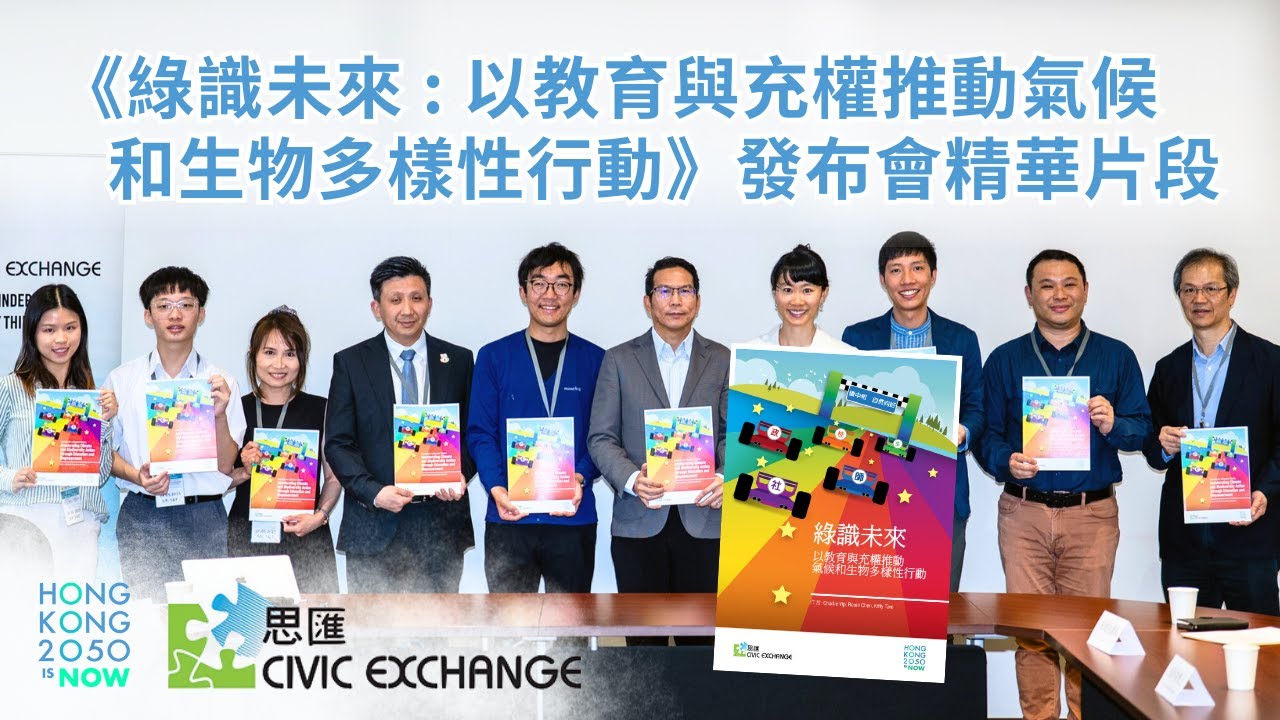
Civic Exchange proudly announces the official launch of its latest report, ‘Learning for a Greener Future’ . The report, unveiled at a dynamic event on 26 May 2025, charts a clear course for strengthening climate and biodiversity education across Hong Kong through systemic change and robust cross-sector collaboration. At the launch, Ms Kitty Tam, our Programme Lead, presented the report's key findings. She underscored the urgent need to embed comprehensive environmental education within the city's learning frameworks to empower the next generation to tackle the escalating climate and biodiversity crises. Voices for Action: Insights from the Expert Panel The launch event was further enriched by a lively panel discussion featuring a diverse group of experts: Hon Chu Kwok Keung (Member of the Legislative Council), Prof Arthur Lau (Associate Professor of Interdisciplinary Education, Division of Environment and Sustainability of HKUST), Mr Yamme Leung (Director of Education of WWF-Hong Kong), Dr Xoni Ma (Founder and Education Director of OWLHK), Dr Hui Chi Kuen (Principal of Sing Yin Secondary School), Ms Lok Yuen Kwan (Chairperson of Environmental Education Committee, Panel Head of Geography Department of Sing Yin Secondary School), Mr Siu Tsz Hin Eric (Head Environmental Prefect of Sing Yin Secondary School), and Ms Charlie Yip (Participant of the first edition of Young Environment Ambassador programme and Community Empowerment Assistant at Civic Exchange). The discussion delved deep into how education and empowerment can accelerate crucial climate and biodiversity action. The urgency of this mission was powerfully framed by Prof Arthur Lau, who shared a thought-provoking question he often poses to students: "How old will you be in 2030 or 2050? For secondary school students, the answer is often around 40 years old. At that age, they will be living through the far-reaching consequences of global temperatures rising by more than 2.5°C. It won’t matter whether you're a business leader, a financial expert, or a teacher—no one will be immune to these challenges. So the real question is: how will you respond? And from another angle, if sustainable development is so deeply relevant to all of us, isn’t it all the more urgent to prioritise and strengthen education in this area—so we can better prepare future generations to face what’s ahead?" A recurring theme was the necessity of decisive leadership and unified efforts. Hon Chu Kwok Keung emphasised this critical point, stating, "Indeed, the Education Bureau (EDB) should play a leading role—whether it is in policy formulation or curriculum design, it should step up and emphasise the importance of Education for Sustainable Development (ESD). EDB should take the initiative. Of course, the Environment and Ecology Bureau also plays a significant part, and both departments have many responsibilities. However, there should be more cross-departmental collaboration, with both sides coming together to discuss how we can improve further." Key Takeaways: A Roadmap for Transformation The panel discussion crystallised into several actionable recommendations: 1. Establish a centralised core task force on Education for Sustainable Development (ESD) This task force should integrate climate and biodiversity education into Hong Kong’s 12 values education and 7 learning goals. It must coordinate policy efforts across bureaux, focusing on promotion and education. Crucially, it needs to identify strategies to shift from mere knowledge acquisition to fostering genuine attitude change. Dr Xoni Ma passionately articulated the importance of moving beyond traditional classroom learning to achieve this: "Why aren’t more people taking meaningful action on environmental protection? A key reason is that our education system hasn’t nurtured the right mindset—most importantly, a genuine love for nature. But can this love be developed by sitting in a classroom? The answer is no. It requires stepping outside, experiencing nature firsthand, and forming a personal connection with it. As Kitty mentioned earlier, most schools today rarely take students beyond the classroom or give them the chance to engage with the natural world. And yet, Hong Kong is home to incredibly rich biodiversity—this is a true treasure. So why aren’t we making better use of it?" The task force should include representatives from the EDB, EEB, AFCD, EMSD, LCSD, and more, with vital input from green groups and professional bodies serving as advisory bodies. Recalling a past successful model, Mr Yamme Leung shared, "I recall that more than twenty years ago, there was a group called the Hong Kong Environmental Education Group. Some of you might remember it. The group included representatives from the government—such as the Education Bureau, the Environmental Protection Department, the Agriculture, Fisheries and Conservation Department, and the Leisure and Cultural Services Department—as well as various green groups. Every three months, everyone would sit down together and discuss various topics. They covered aspects such as teacher training, how to jointly organise training activities and events for teachers and schools, and how to integrate resources across organisations. For example, we might use a centralised approach to publish educational booklets or conduct online publicity, with all groups promoting the same issue together to maximise impact. This could serve as a valuable case study." Encouraging school-based actions, such as peer-to-peer learning, is also paramount. Ms Lok Yuen Kwan offered practical examples for schools: "If other schools want to promote sustainable practices even with limited resources, I have two suggestions. First, set up small-scale weather monitoring stations. With the support of our school’s environmental prefects and teachers, we can use the data to identify ways to save energy. Second, we have been implementing food waste management measures that do not require significant funding." 2. Explore synergy between technology education and ESD through STEAM pathways Dr Hui Chi Kuen highlighted this connection: "The government has also placed strong emphasis on STEAM education, and environmental policy and education are often closely tied to technology. That’s why I believe we should take the opportunity to integrate and reinforce concepts and values related to sustainability within the broader framework of STEAM education." 3. Provide more educator training to equip teachers with the tools for delivering climate and biodiversity content The youth perspective on fostering environmental consciousness was represented by Mr Siu Tsz Hin Eric, who noted, "I believe adults should lead by example by incorporating environmental protection into their daily lives. Adults play a crucial role in creating a more environmentally friendly environment for children and youth, helping them to develop environmental awareness through subtle and ongoing influence." A Model for Empowerment: The Young Environment Ambassador (YEA) Programme Our Hong Kong 2050 is Now Young Environment Ambassador (YEA) programme was spotlighted as a successful model. Ms Charlie Yip, a YEA alumna and now Community Empowerment Assistant at Civic Exchange, shared her transformative experience: "Back in 2021, I participated in the first Young Environment Ambassador Programme (YEA) while I was in F.4. Through the programme, I learnt about topics such as decarbonisation and sustainable consumption—subjects that were not covered at all in my school. Therefore, I hope every secondary school can learn from the YEA programme and organise environmental activities, teaching their students about climate and biodiversity. This would lighten our workload and allow everyone to expand their knowledge." The programme's potential to be "copy-and-paste ready" for Hong Kong schools was a significant point of discussion. The Path Forward: Collaboration and Sustained Action The overarching conclusion from the launch is the undeniable need for greater collaboration – across government departments (especially within the EDB), and critically, between the government and green groups who offer impactful materials and programmes. As Ms Kitty Tam articulated, the work of Civic Exchange does not end with this launch: "Completing a report shouldn’t just end with a press conference. That’s not our goal. We want to follow through with concrete actions—for example, by continuing our engagement with the Education Bureau, the Environment and Ecology Bureau, and the Agriculture, Fisheries and Conservation Department. We hope to explore how civil society can help bridge the gap between knowledge and action. We also sincerely hope to see stronger collaboration among these three departments moving forward." The sentiment that education is a cornerstone of progress was echoed by our Executive Director, Lawrence Iu, who remarked, "Education is indeed a powerful tool. It allows young people--and the broader public in Hong Kong--to experiment with and apply the knowledge they have acquired." Let’s work together to build a more sustainable, empowered generation – one classroom at a time. Our sincere gratitude goes to all who supported the publication of ‘Learning for a Greener Future’ and to the guests who attended and enriched our launch event.
- YEA 4th Edition, Day 1: Climate Fresk and Megawatt
On 22 July, the newest cohort of the Hong Kong 2050 is Now Young Environment Ambassador (YEA) Programme launched their journey with two interactive and thought-provoking group activities: Climate Fresk and Megawatt. These sessions were designed to deepen participants’ understanding of climate science and the complexities of energy generation through hands-on, game-based learning. Participants the Megawatt session, a strategic card game centred on constructing an electricity grid. Players explored various energy sources, from traditional fossil fuels like coal and gas to renewables such as wind, solar, and hydroelectric power. Through this simulation, students gained insight into the importance of balancing power generation capacity with environmental impact, learning that a diversified energy portfolio is key to a sustainable electricity system. The game sparked animated debates on the challenges and trade-offs in real-world energy planning. Throughout the day, students actively engaged with their peers and received guidance from our programme helpers, enriching their learning experience and fostering teamwork. The enthusiasm and curiosity they demonstrated underscore the exciting journey ahead. We also extend our thanks to Charlie, the 1st YEA edition winner, for giving a compelling speech on decarbonisation strategies. Drawing from Charlie’s talk, many students proposed practical measures to lower Hong Kong’s carbon emissions, including implementing a private car tax, offering subsidies for green transport alternatives, limiting the number of cars on the road via purchase quotas, and increasing tunnel fees for private vehicles. These suggestions reflect the group’s growing awareness of policy tools that can drive meaningful environmental change. Finally, the day concluded with the Climate Fresk game. We thank the Climate Fresk Hong Kong team for coming to guide this insightful workshop. Inspired by the latest scientific findings from the United Nations Intergovernmental Panel on Climate Change (IPCC), students worked in small teams to piece together sets of cards representing climate-related causes, effects, and feedback loops, gradually building a detailed visual map of the Earth’s climate system. The lively discussions within groups, aided by our dedicated facilitators, helped clarify the intricate connections between human activities and environmental changes. Many students expressed that this exercise made complex climate science more accessible and memorable. After playing the Climate Fresk, students shared new insights and ideas. One participant suggested that a recycling scheme paired with rewards could encourage more people to recycle plastic bottles. Another proposed that offices should set benchmarks for sustainability actions, such as reducing paper usage and saving electricity. Meanwhile, a third student highlighted the environmental benefits of eating less beef as a way to reduce carbon emissions. As with previous editions, we anticipate that the skills and knowledge gained on Day 1 will empower these young ambassadors to design and implement impactful climate initiatives. We look forward to supporting their growth as future environmental leaders committed to driving positive change.
- YEA's 3rd Edition, Closing Ceremony
The day has finally come for our Youth Environment Ambassadors (YEAs) to showcase what they have learned, accomplished, and achieved during the programme. On 24th August, Civic Exchange organised the Hong Kong 2050 is Now Youth Environment Ambassador programme Closing Ceremony. Our YEAs started the ceremony with a 30-minute marketplace, where each group set up their booth to introduce their project ideas, and outcomes within August for judges and guests. Our judges, Mr Paul Zimmerman, our board member, Professor Arthur Lau from Hong Kong University of Science and Technology, Mr Desmond Chan from ExxonMobil Hong Kong and Youtuber Mr Wong Kar Wai, engaged with the students to fully understand the ideas behind each group. 7 YEA teams then further presented their project in 5 minutes, and our judges generously shared their experiences and insights on individual projects. After a mindful scoring by our judges, the 3 winning teams were formed: Group 2, which set up a thrift store selling repurposed second-hand clothes to promote sustainable fashion, won the YEA Sustainable Leadership Award. RHFF Innovation Award was won by Group 5, which organised an eco-tour and terrarium workshop to raise awareness of Hong Kong's biodiversity. Lastly, Group 4, which set up a photo exhibition in the Hong Kong Maritime Museum to promote nature-based solutions won the ExxonMobil High Potential Award. 24 YEAs with outstanding attendance rates were presented with certificates of completion, and we played a YEA programme recap video to wrap up the entire sustainable journey of our YEAs. We hope that all YEAs have equipped themselves with climate change related knowledge and different skillsets, with horizons broadened to continue working towards a more sustainable future. Once again, we thank all supporting organisations, as well as the judges, workshop panelists, human library guests, and mentors, for making our programme successful and fruitful.
- Empowering Educators for a Sustainable Future: Highlights from the KEL Sustainable Consumption Workshop
Last week, Civic Exchange hosted the KEL Sustainable Consumption Workshop, bringing together educators to explore practical ways to promote sustainability within schools and communities. The workshop began with a visit to Mil Mill, Hong Kong’s first pulp mill and education centre that recycles beverage cartons. Teachers discovered the complexity of carton recycling—each one contains six layers of materials, including paper, plastic, and aluminium. The challenges of recycling in Hong Kong is also highlighted, from limited infrastructure to misconceptions about what can and cannot be recycled. In the second part of the workshop, Mr. Carlos Rius Errando from Harbour School introduced an engaging Sustainable Seafood Game. Designed to teach students about ocean conservation and sustainability, this interactive fishing game explains which seafood is threatened by overconsumption and how making sustainable choices can protect marine ecosystems. Carlos emphasised that even students far from the ocean can connect with marine biodiversity through fun and educational experiences. We concluded the workshop with a discussion on Education for Sustainable Development (ESD), an initiative by UNESCO. The educators shared thoughtful ideas on how to strengthen sustainability education in Hong Kong. They suggested introducing green procurement practices in schools, encouraging institutions to prioritize eco-friendly products alongside affordability. They also proposed refining judging criteria for the Hong Kong Awards for Environmental Excellence (School Sector) (previously referred to as “Hong Kong Green School Award”) to focus on small but impactful changes, like reducing waste or improving energy efficiency. Another significant suggestion was to update the Education Bureau’s 12 Values Education framework and 7 Learning Goals to include sustainability, aligning it with the United Nations Sustainable Development Goals (SDGs) and empowering students to understand their relationship with the planet and the urgency of climate action. This workshop was a powerful reminder of the essential role educators play in shaping a sustainable future. By equipping teachers with the tools and knowledge to inspire their students, we are one step closer to building a greener, more conscious generation.