YEA Alumni Cohort 125 – Lesson 1: Professional Manner, Workplace Presence & Interview Foundations
- Mar 20
- 3 min read
Following the success of the Young Environmental Ambassador (YEA) Programme, the alumni programme was created to support students as they take their next steps beyond the classroom. Designed as a continuation of the YEA journey, the programme focuses on helping participants build practical skills for internships, real-world projects, and potential careers in sustainability.
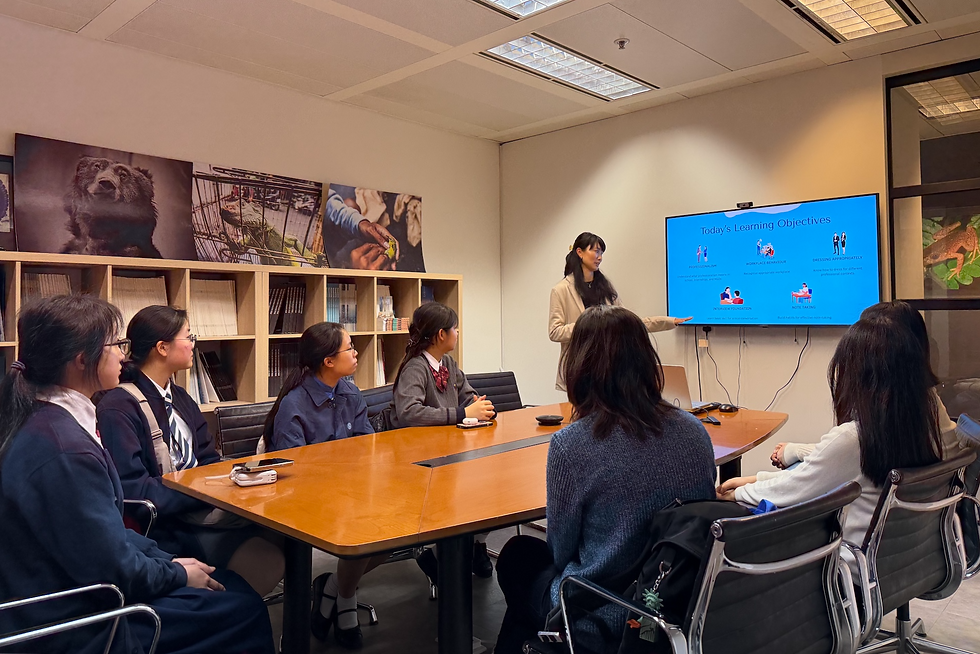
The lesson began with a brief overview of the alumni programme and what students can expect from the five-lesson series. Throughout the programme, participants will gradually build the confidence to communicate professionally, adapt to unfamiliar environments, and eventually design and apply for funding for their own student-led sustainability projects through “YEA Impact Lab”.
The first lesson focused on “professionalism”, many students associate it with age, confidence, or formal clothing. However, the session reframed professionalism as a combination of attitude, reliability, and respect. Through discussions, activities, and practice exercises, students explored what professionalism really means and how they can navigate workplace situations with greater confidence.
Through examples and discussion, students explored behaviours that demonstrate professionalism in everyday situations. These included being punctual, taking responsibility for tasks, communicating clearly, and showing respect for others’ time and work. This reinforced an important idea: professionalism is defined by behaviour and mindset rather than appearance or experience.
The lesson then moved on to workplace etiquette. Many workplace norms are rarely explained directly, which can make them confusing for students encountering them for the first time.
To make these “unwritten rules” more visible, the session introduced practical examples of workplace behaviour. Students discussed how small actions, such as posture, tone of voice, and eye contact, can influence first impressions.
They also explored the importance of listening carefully, asking questions respectfully, and communicating appropriately in digital spaces. Through scenario-based activities, students worked through different workplace situations and discussed how they might respond in a professional and thoughtful way.
Another topic that often causes uncertainty for students is deciding what to wear in professional settings. To help reduce this stress, the lesson introduced common dress codes such as formal, smart casual, and casual.
Students also discussed how expectations can change depending on the situation, whether working in an office, conducting fieldwork outdoors, or attending a public event. The key takeaway was reassuring: professional appearance does not require expensive clothing. Being clean, neat, and appropriate for the setting matters most.
Furthermore, the lesson introduced interview basics in a supportive way, helping students understand that interviews are essentially conversations rather than tests, where employers are often looking for curiosity, enthusiasm, and a willingness to learn.
Students then practised answering common interview questions in pairs, which allowed them to gain their experience in a low-pressure setting while receiving feedback from peers.
The final skill introduced in lesson one was effective note-taking, an essential tool for internships, meetings, and training sessions.
Students explored simple note-taking approaches such as bullet points, headings, and mind maps. Rather than trying to write down every single word, they learned how to identify key ideas and organise information so it becomes easier to review later.
To put this into practice, students listened to a short video and experimented with different note-taking methods, discovering which style worked best for them.
By the end of the lesson, students had gained a clearer understanding of what professionalism is and how they can navigate unfamiliar environments with greater confidence. More importantly, they left with practical tools they can apply immediately, from interview preparation to note-taking strategies.
As the alumni programme continues, future lessons will build on these foundations, guiding students towards designing their own sustainability initiatives and exploring possible pathways into green careers.


Comments